WON · c0mpiled-7 AI Hackathon (YC RFS), Tokyo · 2026
10-K research loops cut to 12 seconds
Context
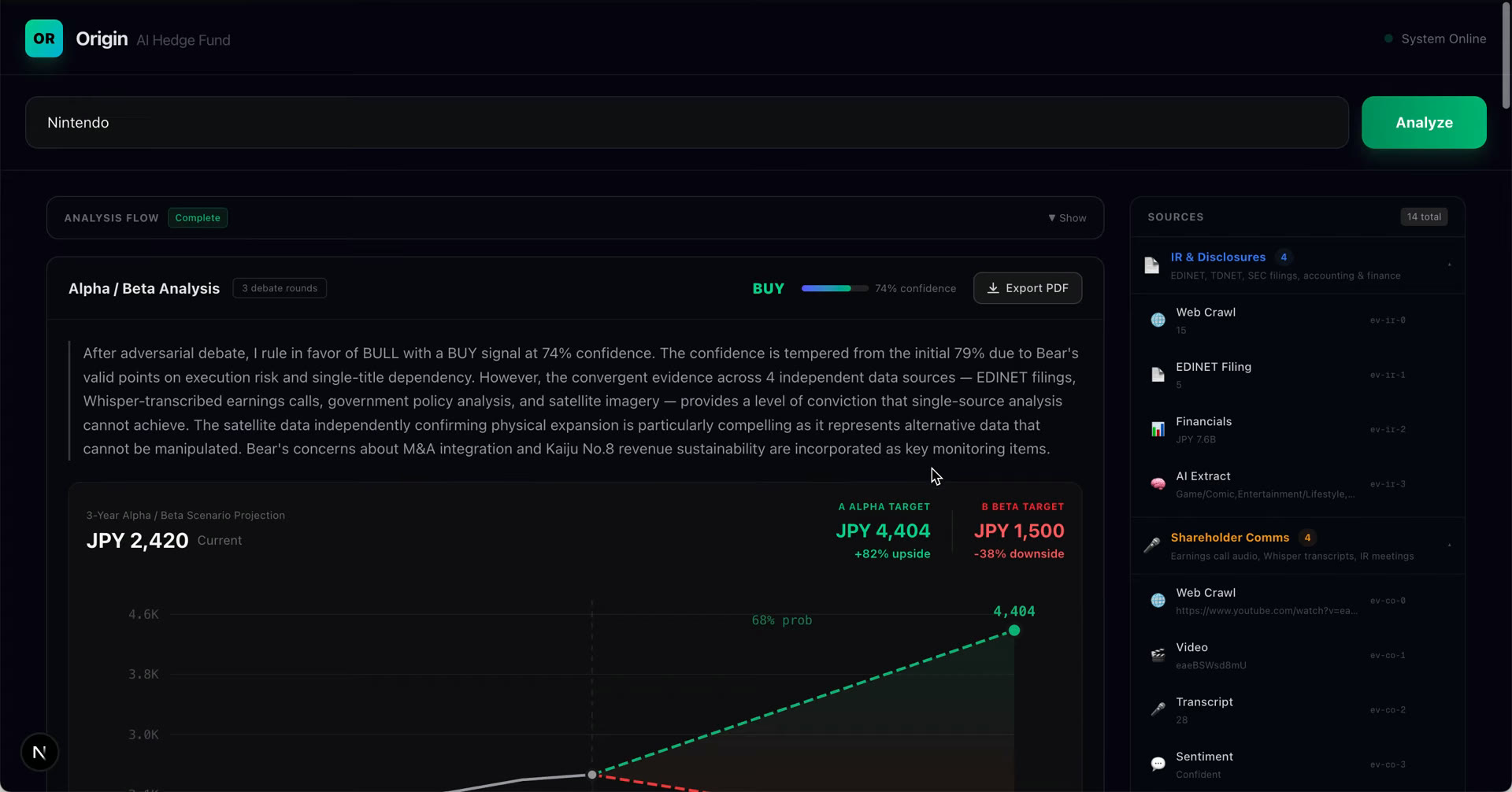
Built in a weekend at the c0mpiled-7 AI Hackathon in Tokyo (a YC Request-for-Startups event), March 2026. The premise: an analyst researching a position reads 10-K filings, cross-references market data, and drafts a thesis — a loop that takes hours per company. We compressed it to seconds.
What I built
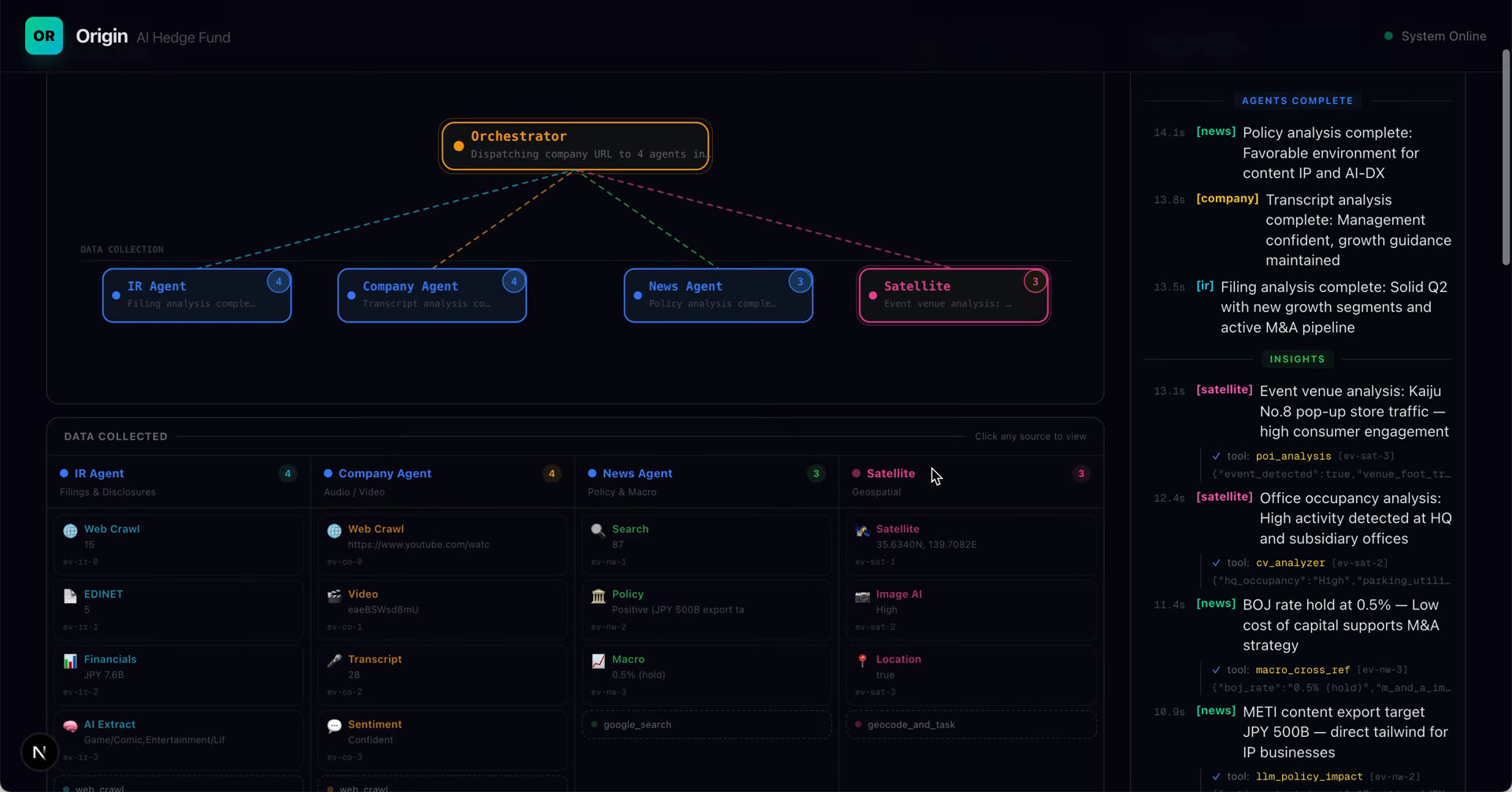
A multi-agent platform structured like a small research desk: a LangGraph orchestrator routes work to specialist AutoGen agents — filing readers, a market-data agent, a synthesis agent that drafts and critiques the thesis — behind a FastAPI service.
The decision that won the engineering award was inference. Running Shisa-70B, a Japanese-tuned open-weight model, let the agents read Japanese filings natively and kept the whole loop on infrastructure we controlled — no rate limits from a hosted API mid-demo, and per-query costs low enough to let agents argue with each other, which is where multi-agent setups actually earn their complexity.
Results
- Full research loop — filings in, cited draft thesis out — in 12 s, down from the hours an analyst spends; measured under hackathon demo conditions, not production load
- Won “Most Impressive Engineering Lift” from the judging panel